Ayodhyaअयोध्या — Shri Ram Ki Nagri
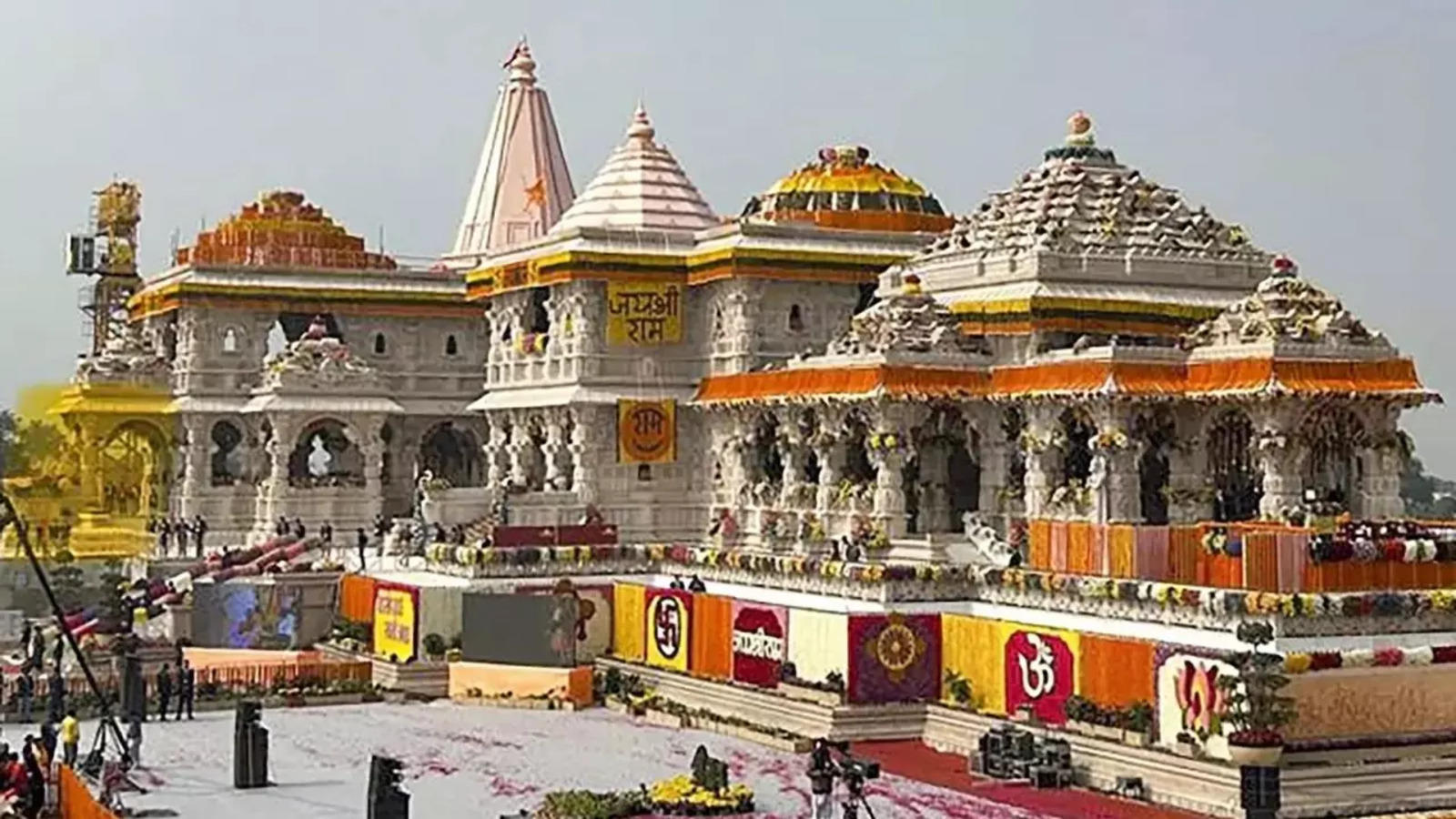
Ayodhya is one of the seven sacred cities (Sapta Puri) in Hinduism. Birthplace of Lord Rama and site of the legendary Ram Janmabhoomi temple. Millions of devotees visit every year.
11+
Tourist Spots
0+
Hotels
0+
Guides
 🛕Must Visit
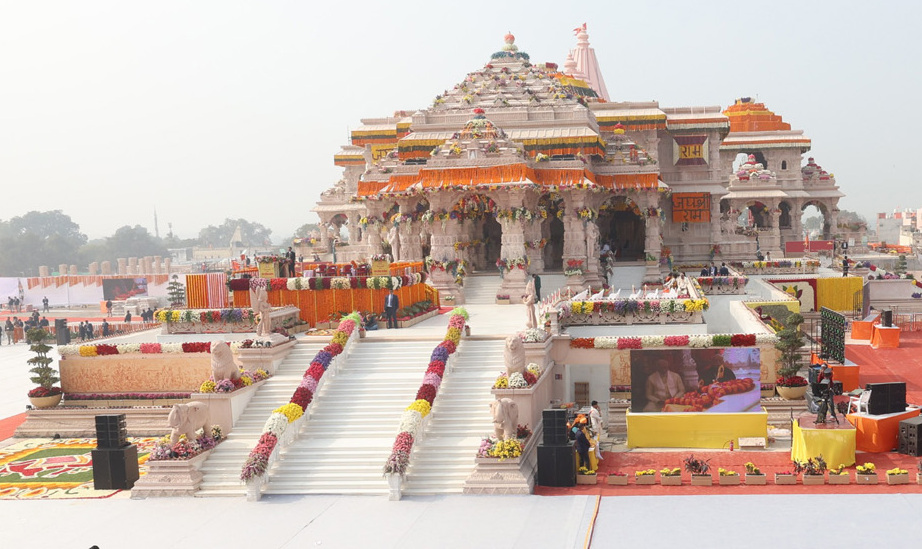
राम जन्मभूमि मंदिर
07:00–19:00
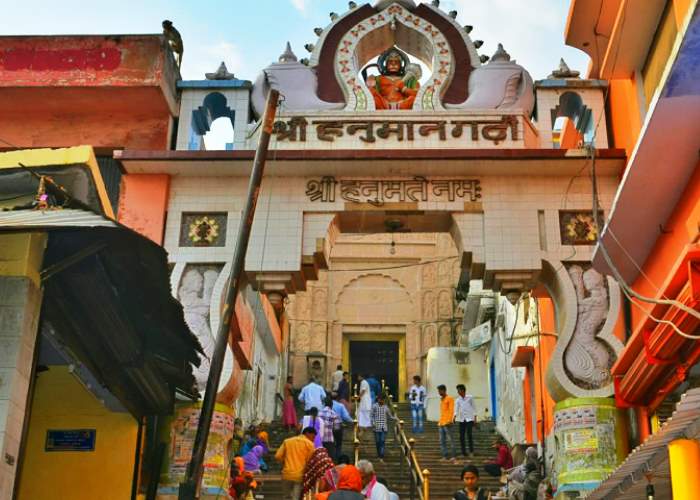
हनुमान गढ़ी
Temple
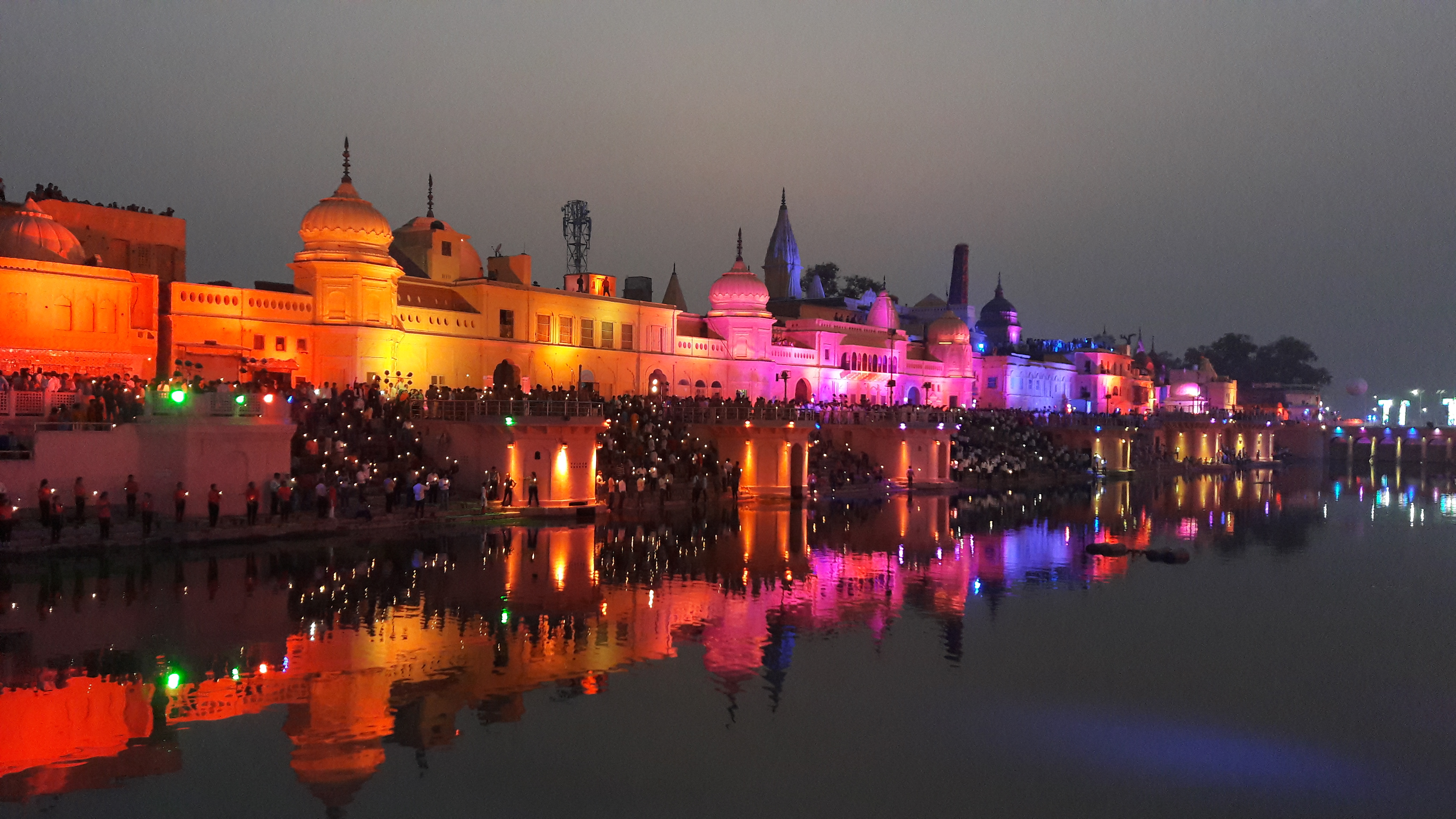
राम की पैड़ी
Ghat
Know Your City
History
Ayodhya is one of the world's oldest cities, mentioned in the Vedas and Ramayana. Birthplace of Lord Rama. Emperor Vikramaditya renovated it ~57 BCE. The Ram Janmabhoomi dispute lasted ~500 years until the 2019 Supreme Court verdict. The magnificent Ram Mandir was consecrated on 22 January 2024 by PM Modi, celebrated by 500 million people.
Culture & People
Ayodhya exudes Awadhi spirituality — warm people, pure veg food, bhajans all hours. The Deepotsav (Diwali) sees 3 lakh+ diyas on Saryu ghats — UNESCO record. Ram Leela during Navratri draws lakhs. Local food: Malpua, Rabri, hot Kachoris.
Best Time to Visit
- ▸Oct–Nov: ✨ Best — Deepotsav
- ▸Dec–Jan: ❄️ Cold, spiritually peak
- ▸Feb–Mar: 🌸 Holi
- ▸Apr–Jun: ☀️ Very hot, avoid
- ▸Jul–Sep: 🌧️ Monsoon
- ▸Ram Navami (Apr): Huge festival
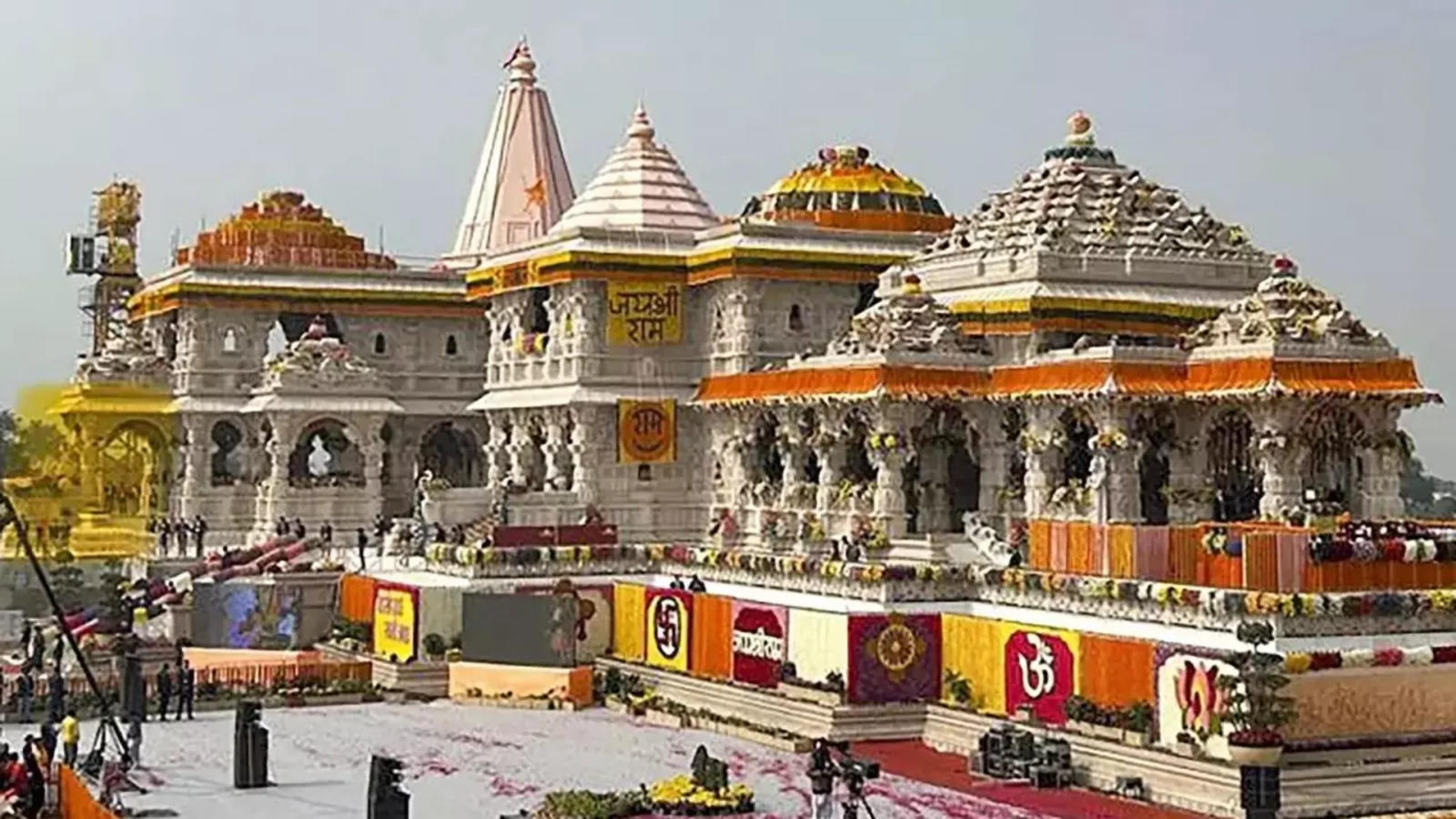
Ram Janmabhoomi Temple
Standing on the exact birthplace of Lord Rama, the magnificent new Ram Mandir was consecrated on January 22, 2024 — a momentous day celebrated by millions across India and the world. Built in the Nagara architectural style using pink sandstone from Rajasthan's Bansi Paharpur, this 161-foot-tall temple is the crown jewel of Ayodhya. The idol of Bal Rama (child Ram) in the sanctum sanctorum is said to have been carved by a sculpt ure found in the Saryu riverbed. The complex also houses museums, pilgrimage facilitation centers, and elaborate gardens. Visiting at sunrise, when the first rays fall on the idol through precisely engineered openings in the temple dome, is an experience unlike any other.
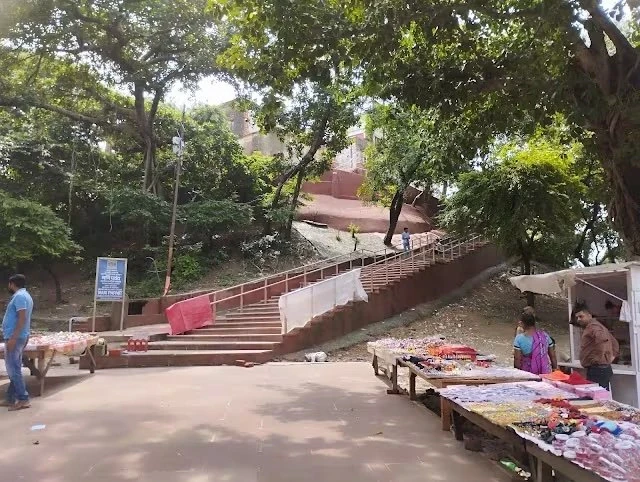
Hanuman Garhi
Perched atop a 10-meter hillock at the very heart of Ayodhya, Hanuman Garhi is the city's spiritual guardian. Legend holds that Lord Hanuman himself lived on this hill to protect Ram Janmabhoomi. The 76-step climb is itself an act of devotion — each step brings you closer to the vermillion-smeared idol of Hanumanji. From the top, a breathtaking 360° view of Ayodhya spreads before you, with the spires of dozens of temples visible at sunrise. The temple has been here since the time of Nawab Saadat Ali Khan and remains one of the most beloved temples in all of Uttar Pradesh.
Ram Ki Paidi
Ram Ki Paidi — the stepped embankment on the holy Saryu river — is where Ayodhya's soul breathes. Every evening at 7 PM, a spectacular aarti (prayer ceremony) transforms these ghats: dozens of priests waving fire torches, the river shimmering with hundreds of diyas, and devotional chants filling the air. According to scriptures, the Saryu river flows directly from Lord Vishnu's feet, making a holy dip here extraordinarily auspicious. The ghats light up beautifully at night — an Instagram-worthy sight that will stay with you forever.
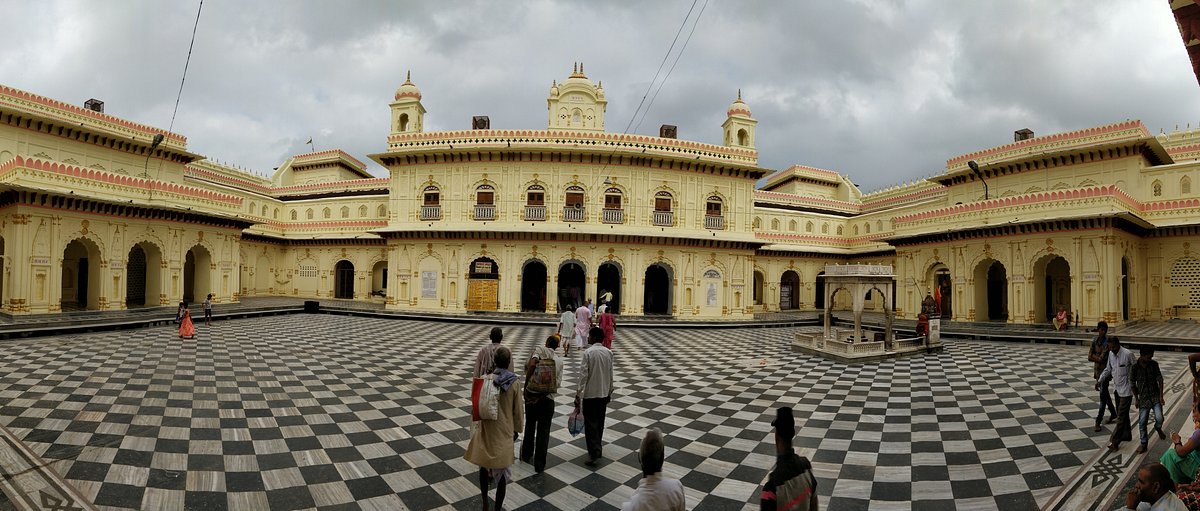
Kanak Bhawan
Kanak Bhawan — the Golden Palace — has one of the most heartwarming origin stories in Ayodhya. It is believed that Queen Kaikeyi gifted this golden palace to Sita ji at the time of Ram and Sita's marriage. Inside, the gold-plated idols of Ram and Sita are adorned with the finest ornaments and garments, changed every day. The architecture is a blend of Bundeli and Rajput styles, with intricate latticework and golden domes. This temple is especially popular among newly married couples seeking blessings for a happy union.
Saryu River Ghat
The holy Saryu flows serenely through Ayodhya, carrying centuries of devotion in its waters. Multiple ghats line the river, each with its own spiritual significance. A dawn boat ride on the Saryu — as mist rises from the water and the first temples light up on the banks — is one of the most peaceful experiences in all of India. The river is mentioned throughout the Ramayana: it was in these very waters that Lord Rama took his final journey to Vaikuntha (Vishnu's abode). A holy dip here is believed to wash away the sins of not just this life, but seven past lives.
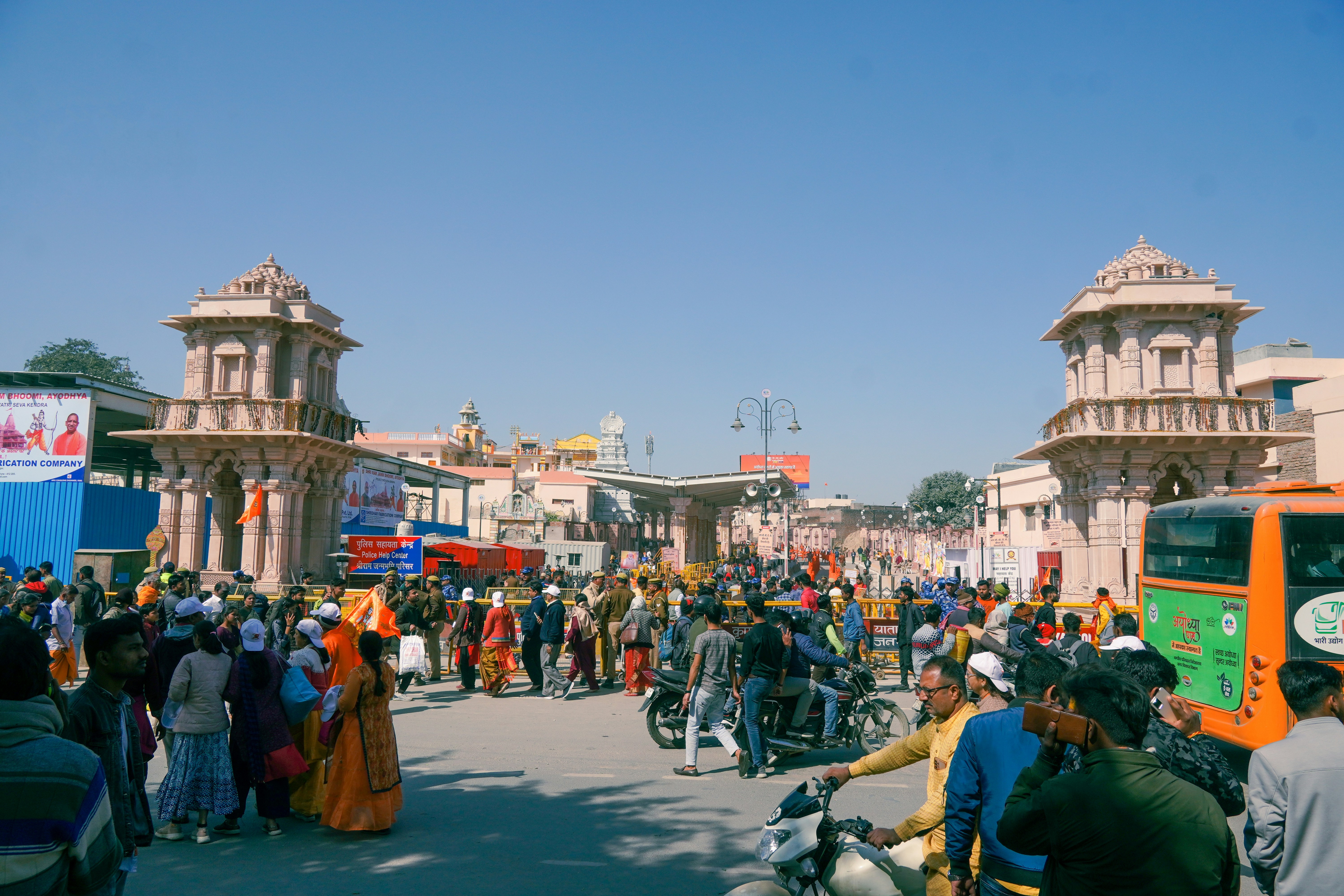
Dashrath Mahal
This ancient palace is where the story of the Ramayana truly began. Dashrath Mahal is the legendary palace of King Dashrath, the noble king of Ayodhya and father of Lord Rama, Lakshman, Bharat, and Shatrughan. It was here that King Dashrath made the fateful promise to Queen Kaikeyi that led to Rama's 14-year exile — an event that set the entire Ramayana in motion. Walking through these ancient corridors, one can almost hear the echoes of royal court proceedings, the king's lament, and the footsteps of the young princes. A local guide will bring these walls to life with vivid narration.
Mani Parvat
Mani Parvat is a small but mythologically extraordinary hillock in Ayodhya. According to the Ramayana, when Lakshmana was struck by the Shakti arrow by Meghnad (Ravana's son), Hanuman ji flew to the Himalayas to fetch the Dronagiri mountain bearing the life-saving Sanjeevani herb. On his return flight, a fragment of the mountain fell here — and that is what Mani Parvat is believed to be. The hillock is crowned by a small ancient temple, and the sunset view of Ayodhya from the top — with temple spires silhouetted against the orange sky — is simply unforgettable.
Sita Ki Rasoi
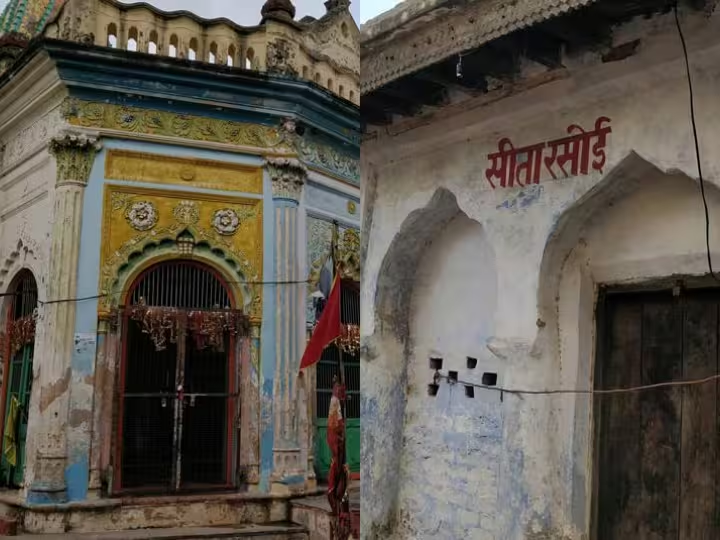
Sita Ki Rasoi is perhaps the most unique and tender spot in all of Ayodhya. According to legend, this is the kitchen of Mother Sita herself — where she cooked for Lord Rama after their marriage. On display are ancient stone utensils believed to date back to the Treta Yuga (the age of the Ramayana), preserved here for thousands of years. What makes this place extraordinary is not just its antiquity, but its intimacy — it connects you not to battles and boons, but to the quiet domestic life of the divine couple. The temple priest narrates the full story of how this kitchen was discovered and preserved through the ages.
Bharatkund / NandiGram
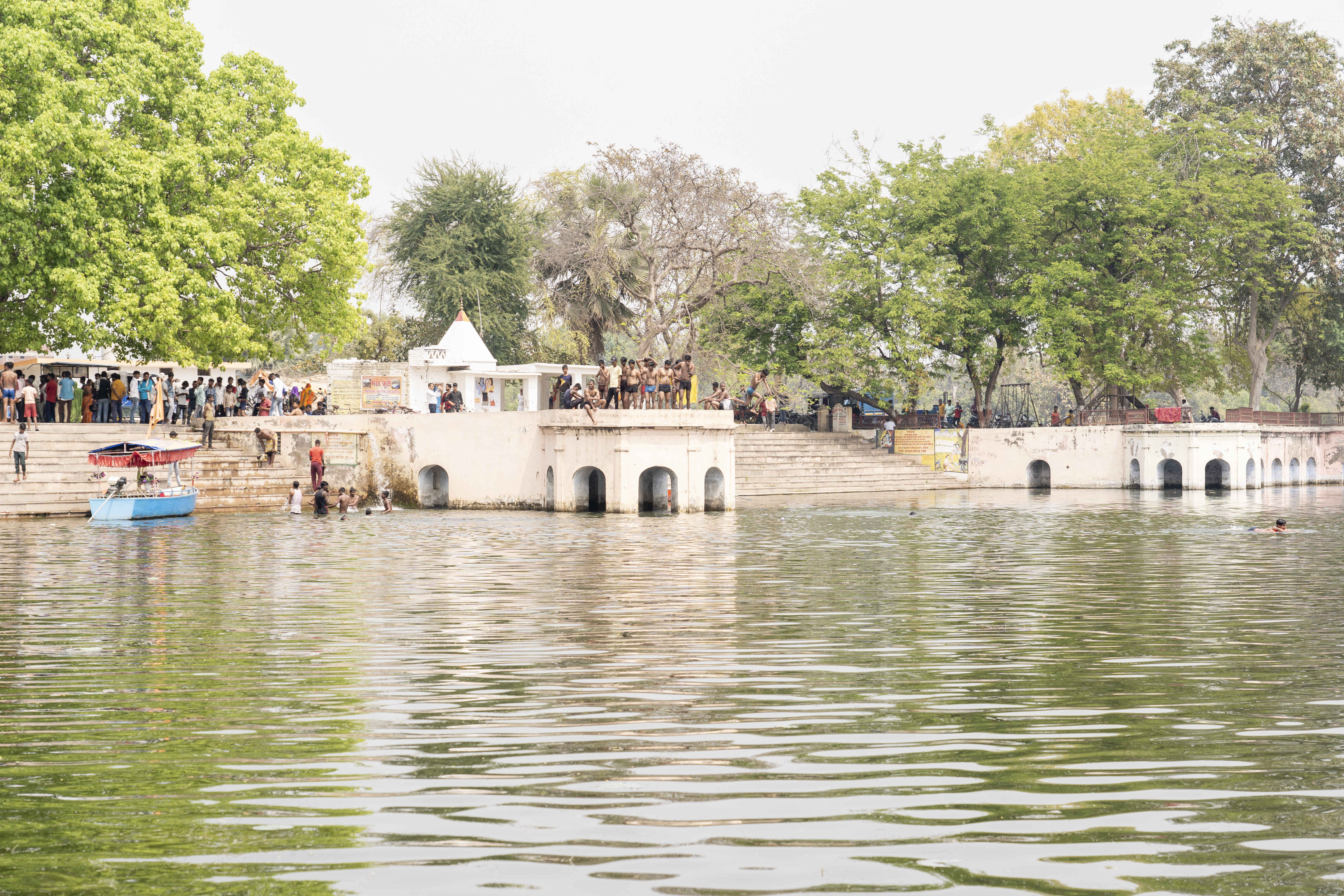
NandiGram — located 18 km from Ayodhya — is the site of one of the Ramayana's most moving chapters. When Lord Rama left for his 14-year exile, his devoted younger brother Bharat refused to accept the throne. Instead, he came here to NandiGram, placed Ram's Padukas (sandals/footwear) on the throne, wore bark clothing and slept on grass — ruling in Ram's name as a mere caretaker for 14 years. Bharatkund is the sacred pond where Bharat took his daily ritualistic dip during this penance. The site is considered the highest example of fraternal devotion in all of Hindu tradition.
5 Koshi Parikrama
The 5 Koshi (15 km) Parikrama is the inner sacred circumambulation of Ayodhya. Starting from the Saryu banks near Ram Ki Paidi, the route winds through major temples, sacred kundas, and ghats before completing the circle. Lakhs of barefoot pilgrims complete this parikrama during the Kartik month (Oct–Nov), which is considered the most auspicious time. The route passes through Hanuman Garhi, Kanak Bhawan, Ram Janmabhoomi, and 12+ other sacred sites.
14 Koshi Parikrama
The 14 Koshi (42 km) Parikrama is the grand outer circumambulation of Ayodhya — one of the holiest walking pilgrimages in North India. The 2-day route passes through NandiGram (Bharatkund where Bharat performed penance), Shravan Kshetra, and the outer sacred boundary of the holy city. During Ram Navami, over 5 lakh pilgrims complete this barefoot parikrama. Free meals (langar) are served by temples and dharamshalas all along the route.
Ayodhya • Transparent Fare Rules
* Rates are approximate and may vary by season. If charged more than shown, report immediately.
| From | To | Auto Fare | E-Rickshaw | Taxi Fare |
|---|---|---|---|---|
| Railway Station | Ram Mandir | ₹50–80 | ₹30–50 | ₹120–150 |
| Railway Station | Hanuman Garhi | ₹50–70 | ₹25–40 | ₹110–140 |
| Ram Mandir | Saryu Ghat | ₹20–40 | ₹15–25 | ₹60–80 |
Verified Hotels Only
Every property physically verified. ID proof mandatory at all properties.
Secure Payments
All payments through StayYatra. No cash deals outside platform.
24x7 SOS
Emergency helpline always active. One-tap SOS alerts hotel + local help.